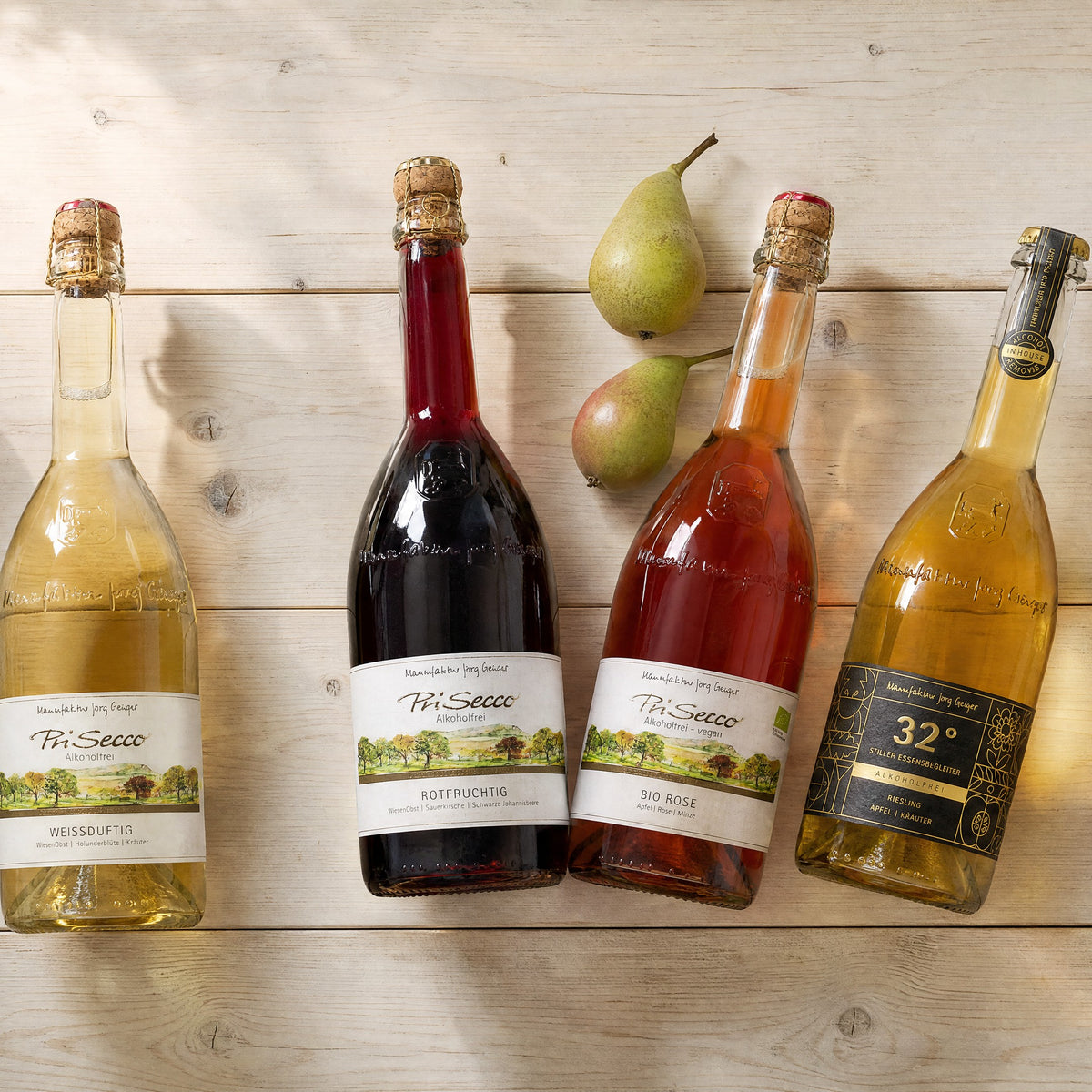
Jörg Geiger PriSecco Red Fruit non-alcoholic. Sparkling non-alcoholic PriSecco with sour cherry, black currant, and elderberry – based on the original 2003 recipe.
Jörg Geiger PriSecco Red Fruit non-alcoholic is the first PriSecco from the Jörg Geiger manufactory in Schlat on the Swabian Alb: apple and pear juice from Swabian meadow orchard fruit combined with sour cherry, black currant, elderberry, quince, and lime, sparkling, 0.0% alcohol, 750 ml. Not a Prosecco, not a sparkling wine, not a juice spritzer – a unique composition for an aperitif and a meal.
Red Fruit by Jörg Geiger is the PriSecco that started it all. PriSecco is a registered trademark of the manufactory. It refers to a non-alcoholic, sparkling composition based on fruit juices from Swabian meadow orchard fruit, supplemented with herbs, flowers, and spices, and with added carbonation. Jörg Geiger bottled the first PriSecco in 2003. It was this red one, and according to the manufactory, it is still made according to the original recipe today. Imagine the Sunday table in autumn: the saddle of venison is resting, the cranberries are ready, and children, drivers, and grandparents are sitting at the table. From one bottle, you pour everyone the same deep red, sparkling glass. For us, Red Fruit has been one of the top sellers in the Geiger range for years.
Taste
Red Fruit smells of dense, dark fruit: sour cherry, black currant, and elderberry, plus the fresh note of lime. In the glass, there is a strong red with a fine perlage. On the palate, the fruit remains dark-berry-like. Cherry and currant are at the forefront, the elderberry provides depth. Then the acidity sets in, stimulating and clear. With it comes a slight tartness, which the manufactory attributes to the quince and lime. The fine carbonation keeps the whole thing fresh and carries the fruit through to the finish.
The composition explains this character. Apple juice forms the 50 percent base, with pear juice from meadow orchard fruit added to it. Sour cherry and black currant juice account for eight percent each. Elderberry and quince juice, some lime juice concentrate, and spices round it off. The sweetness comes from the fruits themselves; the ingredient list includes juices, spices, and carbonation. This is why Red Fruit tastes juicy and fruit-forward, while remaining clearly defined thanks to the acidity and the tartness of the quince.
Among the PriSecco varieties, Red Fruit is the dark, berry-type. The white varieties focus on flowers, pear, and herbs, while Red Fruit focuses on cherry and cassis. This makes it a companion for heartier dishes and for the colder season, even if it works just as well chilled in the summer.
Usage
You drink Red Fruit well-chilled at 8 to 10 °C from a champagne flute. For Jörg Geiger, it is a stimulating aperitif on its own. The first glass upon arrival opens the evening with fruit and acidity instead of alcohol. And everyone at the table toasts with the same drink.
For food, the manufactory recommends fine game dishes with cranberries. This fits because the sour cherry picks up the acidity of the berries and the elderberry adds the dark note of the sauce. A saddle of venison with cranberries, a braised leg of wild boar, or a venison goulash with spaetzle get a glass that can keep up. For dessert, Jörg Geiger mentions a dark chocolate-forest berry dessert. Chocolate and currant are a proven pair, and the carbonation refreshes the palate after every spoonful.
A 750 ml bottle is enough for five to six glasses. Once opened, close it with a sparkling wine stopper and put it in the refrigerator; the perlage will last until the next day.
Our tip: Place a small bowl of cranberries next to the glass with your game roast and alternate between a spoonful and a sip. You will notice how the sour cherry and black currant pick up and carry the berry acidity.
Origin
Red Fruit comes from the Jörg Geiger manufactory in Schlat at the Albtrauf of the Swabian Alb. Jörg Geiger is a trained chef and took over his parents' inn, the Lamm, in 1997 at the age of 22. In 1998, he began working with the "Champagner Bratbirne" (champagne roasting pear). When the first PriSecco was bottled in 2003, the Bratbirnen bore no usable fruit due to a pathogen. According to the manufactory, another old pear variety was used, and that is how Red Fruit was created. In 2007, PriSecco was registered as a trademark, two years before the protected designation of origin "Prosecco" according to the manufacturer. Today, the brand includes the four classics Red Fruit, White Scented, Rose Magic, and Apple Symphony, as well as several seasonal editions.
The raw material is Swabian meadow orchard fruit: old, often tart apple and pear varieties from traditional orchards in the region, supplied by local farmers. These juices bring acidity and tannins and give a sparkling composition structure. A portion of the currants is grown by the Läpple family in Hattenhofen, on about six hectares exclusively for the manufactory. From delivery to ripening and composition to bottling, all steps take place in the manufactory.
Because all PriSeccos are made on a juice basis, the alcohol content is 0.0 percent according to the manufacturer. The bottle has a shelf life of at least 24 months and can therefore be stored well in the cellar as a supply for the holidays. You can taste the fact that there is a trained chef behind the bottle in the acidity and tartness. Both give Red Fruit enough backbone to stand up to a game dish.
For whom
Red Fruit is the bottle for tables where some of the guests are abstaining from alcohol. Think of family celebrations, Christmas dinner with game, or a birthday with drivers and pregnant guests at the table. Anyone living alcohol-free gets a glass with character that goes well with food. As a gift, the manufactory's first PriSecco brings its own history with it.
Those looking for a light counterpart should try the PriSecco White Scented. Organic-quality red fruit, with aronia, tea, and meadowsweet, is offered by the sparkling Organic Red. You can find all bottles from the manufactory on our Jörg Geiger page. Red Fruit is not suitable for those looking for a tart, dry aperitif – it is fruit-forward and noticeably sweet.
Sour cherry, black currant, and elderberry according to the 2003 recipe – the red PriSecco from Schlat for game roasts, berry desserts, and toasting at the family table.