




-
 BärlauchsenfRegular price 5,90 €Sale price 5,90 € Regular priceUnit price 51,30 €/kg
-
 Raspberry mustardRegular price 5,50 €Sale price 5,50 € Regular priceUnit price 44,00 €/kg
-
 Pear mustardRegular price 5,50 €Sale price 5,50 € Regular priceUnit price 44,00 €/kg
-
 Fig mustardRegular price 5,50 €Sale price 5,50 € Regular priceUnit price 44,00 €/kg
-
 Organic Hot MustardRegular price 5,49 €Sale price 5,49 € Regular priceUnit price 40,67 €/L
-
 Organic Fruity MustardRegular price 5,49 €Sale price 5,49 € Regular priceUnit price 40,67 €/L
-
 Organic Mild MustardRegular price 5,49 €Sale price 5,49 € Regular priceUnit price 40,67 €/L


Mustard: Condiment paste made from ground mustard seeds
Mustard is a ready-to-eat condiment paste made from ground mustard seeds, water, vinegar, salt, and spices. Regionally, it is also known as "Mostrich" or "Mostert". Whether a mustard tastes mild or hot, smooth or coarse, sweet or fruity depends on the seeds used, the grind, and the additional ingredients. This category features three organic mustards from Leipzig and three fruit mustards from the Oberberg region.
Yellow, brown, black: where the heat comes from
Three plants are used for mustard: yellow or white mustard (Sinapis alba), brown mustard (Brassica juncea), and black mustard (Brassica nigra). The heat remains locked inside the whole seed. Only when the seeds are ground and mixed with liquid does an enzyme, myrosinase, release the pungent mustard oils from the mustard oil glycosides.
The seeds differ significantly in this regard. Brown and black seeds produce allyl isothiocyanate, which is volatile and rises into the nose—similar to horseradish. Yellow seeds produce a mustard oil that hardly evaporates and provides a more gentle warmth on the tongue. The more brown or black seeds a mustard contains, the hotter it becomes. Because mustard oils evaporate and break down when heated, mustard becomes milder when cooked.
Mustard varieties and heat levels
What is common as mustard in Germany is described by a guideline from the Food Association (Lebensmittelverband). From this, and from trade custom, the well-known varieties emerge:
- Sweet mustard: also known as Bavarian or "white sausage" mustard, with coarsely ground, partially roasted seeds and a distinctly sweet taste.
- Mild: with plenty of yellow seeds or rounded off with fruit and honey, creamy and gentle.
- Medium-hot: the everyday mustard, usually a mix of yellow and brown seeds, often sold as "delicatessen" mustard.
- Hot: primarily made from brown or black seeds. It may be labeled as "hot" on the jar if the heat is derived from the mustard seeds themselves.
- Dijon mustard: a method of production rather than an indication of origin – made from brown or black seeds, finely sieved, and mixed with vinegar, wine, or grape must.
- Coarse-grain mustard: with coarsely ground or whole seeds that release more flavor when chewed.
- Fruit mustard: mustard with a high fruit content, such as fig, pear, or raspberry, sweet and mild.
Our mustards from Leipzig and Wiehl
Our top seller is the Organic Fruity Mustard from Rosenberg Delikatessen in Leipzig: yellow and brown seeds with apple and quince juice, spirit vinegar, and Hallore boiling salt, slightly coarse. All three Rosenberg mustards are produced exclusively by Georgsenf in Halle. Also very popular is the Organic Hot Mustard with a high proportion of black mustard seeds, apple and pear juice, and honey from the Mohr apiary. The Organic Mild Mustard made from white and black seeds is creamy and fruity-sweet.
Königskind makes its fruit mustards by hand in Wiehl in the Oberberg region, using fresh fruit. The Pear Mustard contains 63% pears and tastes mild, the Fig Mustard with 60% figs is sweet, coarse, and slightly hot, and the red Raspberry Mustard with 70% raspberries is fruity and slightly tart.
Mustard in the kitchen
A robust mustard belongs with bratwurst and roasts; for beef roulades, spread the Organic Hot Mustard thinly on the meat before adding bacon, onion, and pickles. Mild mustard is suitable for children's sausages, cheese sandwiches, and vinaigrettes—a teaspoon of mustard helps to emulsify the vinegar and oil. Fruit mustard is the perfect partner for a cheese platter: fig mustard with spicy mountain cheese, cold cuts, and white sausage; pear mustard for an evening platter with aged cheese; raspberry mustard with goat cheese and Camembert or in a salad dressing. For a mustard sauce to serve with fish or eggs, stir the mustard into the hot sauce only at the end so that the heat is preserved.
Buying and storing mustard
- Choose your heat: For children and cheese, use the mild or a fruit mustard; for roasts and sausage, the hot variety.
- Read the ingredients: The Rosenberg mild and hot mustards contain honey, the fruit mustards contain sugar. Mustard is classified as an allergen that must be labeled.
- Unopened: store in a cool, dark place, and mustard will keep for a long time.
- Opened: keep sealed in the refrigerator. Over time, the heat will fade, and the mustard may dry out slightly or separate—give it a stir and it will be creamy again.
- Clean spoon: Crumbs and food residue in the jar will shorten the shelf life.
More for snacks and grilling
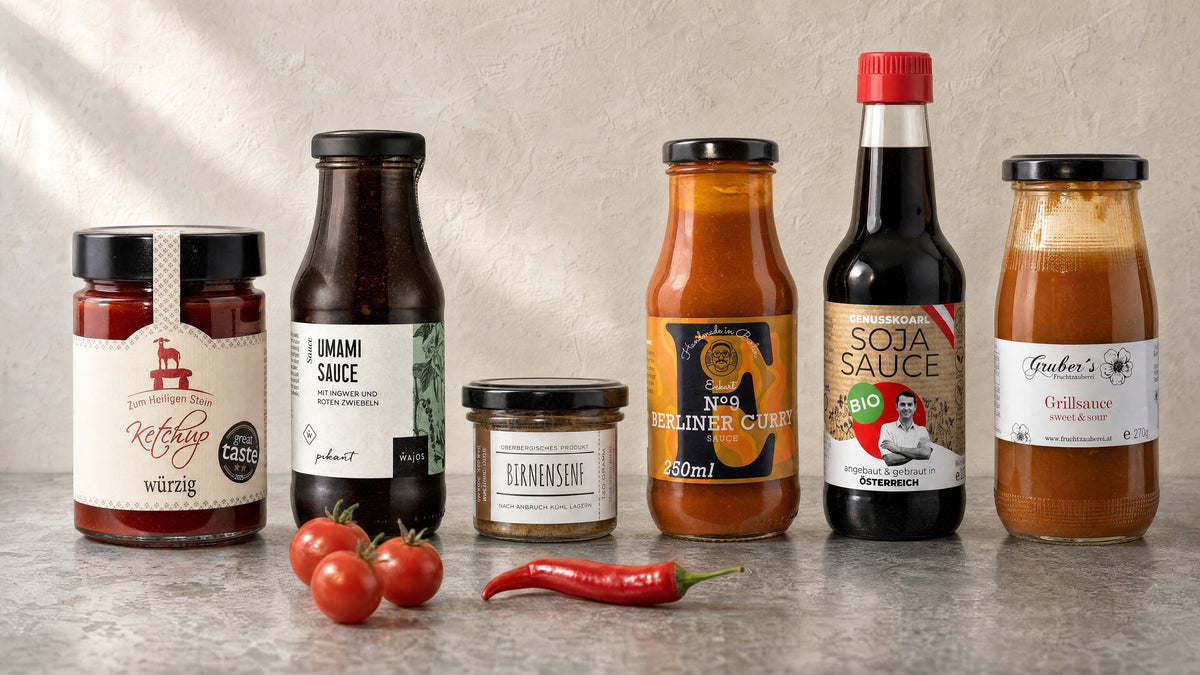
Mustard is part of our Sauces, Ketchup & Co. collection. If you prefer tomato with your bratwurst, you can find ketchup in mild, spicy, and hot varieties under Ketchup & Grilling Sauces. Mustard is also used as an ingredient in sauces such as dill-mustard sauce for salmon or honey-mustard salad dressing—both of which can be found under Condiment Sauces.
Order mustard online
Whether it's organic mustard for a snack or fig mustard for a cheese platter: you can order your mustard online from Leni & Hans, and your package will arrive in 1–3 days.


